1. Study as an Exchange Student at the University of Osaka
Exchange Students
Exchange students at the University of Osaka (UOsaka) are defined as international students who are officially recommended by their home university (partner universities*) to study at UOsaka without aiming to earn a degree from UOsaka. Exchange students may study at UOsaka for up to one year.
* Partner Universities: Universities and institutions that have established academic exchange agreements with UOsaka.
How to Apply
Information concerning exchange program applications will be sent to relevant exchange program staff at partner universities. Please request the information from them. UOsaka cannot respond to requests from students or third parties. Please also note that we do not generally accept repeat exchange participants in principal if they are applying for the same degree level.
How to study at The University of Osaka as an Exchange Student
Students at partner universities are requested to visit the websites of their home university and contact relevant exchange student program staff. Even students recommended by their home university must pass a screening at UOsaka to study here.
Enrollment Requirements
Students must be enrolled at their home university for at least one year and graduate students for at least six months at the time of application. Graduate students who have been enrolled for less than six months are eligible to apply if they have been enrolled for at least one year in total, either between an undergraduate and master’s program or a master’s and PhD program within the same university. Students must also be continually enrolled and progressing as a full-time, degree-seeking student at their home university.
Academic Requirements
Exchange students with excellent academic performance are expected to be nominated. Generally, this means having a 3.0 GPA on the 4.0 scale; upper second-class in the UK’s undergraduate honours grading system; a B in ECTS grading scale; or 80-85% in Chinese and Korean universities in the current degree program at their home university.
Language Requirements
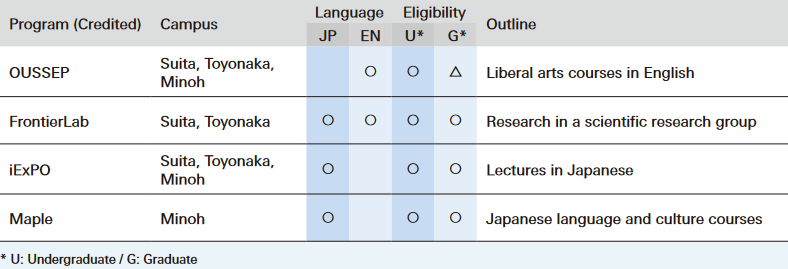
Students must meet the Japanese or English proficiency requirements of the exchange program to which they apply. All students, including those in the iExPO program in which Japanese is the main language of instruction, must be able to read and understand simple English to apply for these programs. The OUSSEP program requires only English proficiency; no prior knowledge of Japanese is necessary.
Citizenship
Students must be a citizen, legal resident, or visa holder in the country/region of their home university. Students with Japanese citizenship may be considered if they were mainly educated outside of Japan.
Health
Exchange students must meet the minimum requirements of physical, mental, and social health to study abroad.
University-wide Exchange Programs
The University of Osaka accepts exchange students from our partner universities. The following four student exchange
programs are offered: OUSSEP, FrontierLab, iExPO, and Maple.
Exchange Period
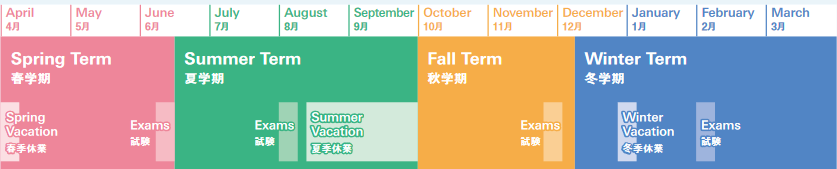
The school year of the University of Osaka starts in April and ends in March. Although the University of Osaka operates
on a four-term system, OUSSEP, FrontierLab, and iExPO start either in April or October, while Maple starts only in
October. As the exchange program start date and duration can NOT be changed after students receive an offer, be sure
to apply for the correct admission cycle with the correct period of exchange.
2. Living Expenses, Housing, and Visa
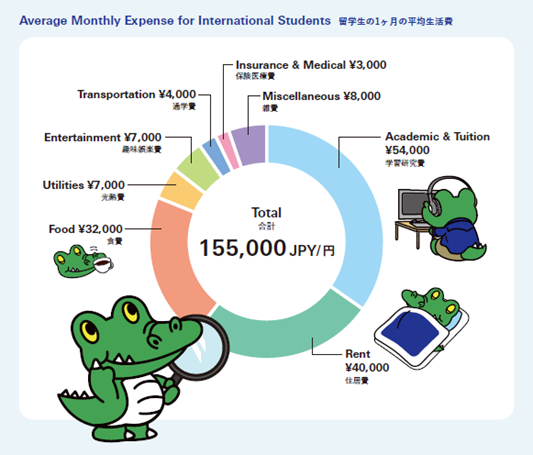
Average Monthly Expense for International Students
Visa
Before coming to Japan, accepted students must obtain a student visa issued by the Japanese Embassy or Consulate in their country of residence. The Support Office for International Students and Scholars of the University of Osaka will assist with the visa application process, and students must apply for a visa three months before coming to Japan.
Residential Facilities for Exchange Students
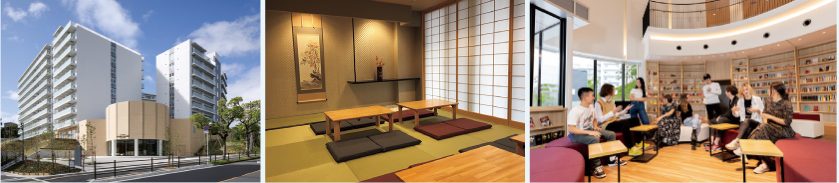
Exchange Students are strongly recommended to stay at Global Village*, one of the University of Osaka’s dormitories. OUSSEP, FrontierLab, and iExPO students are asked to stay at GV Tsukumodai, and Maple students are asked to stay at GV Minoh Semba.
OUICP students may be asked to stay at a dormitory other than GV Tsukumodai depending on the time of year.
*Global Village Tsukumodai is an integrated facility with student dormitories, staff housing, and mixed-type living units where students from Japan and overseas can interact.
3. Campuses / Access Map
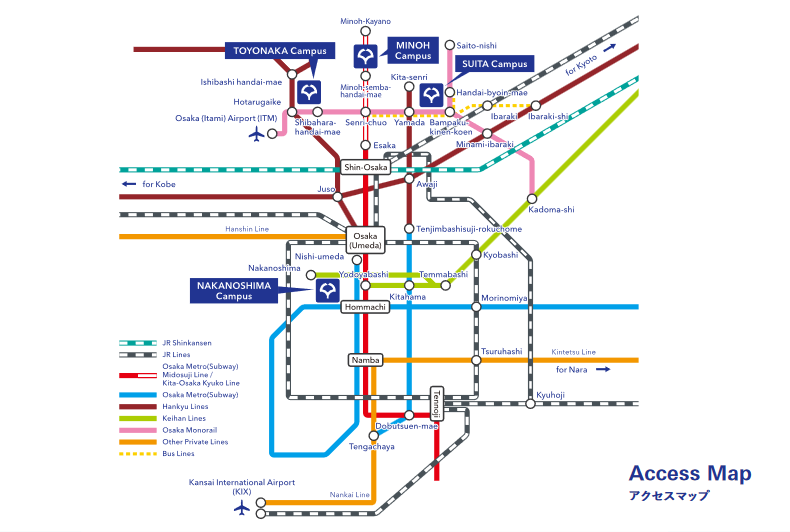
Suita Campus
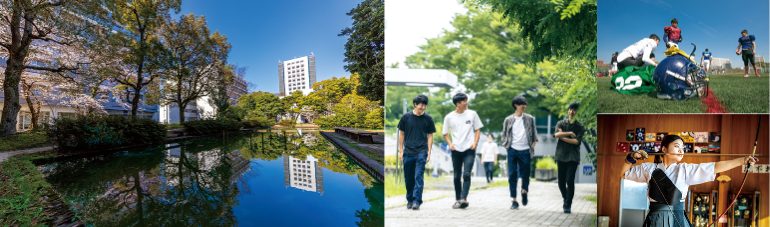
Suita campus, the largest of the three campuses and the headquarters of the University of Osaka, is adjacent to the north edge of Expo ’70 Commemorative Park. A large number of industry-university joint projects are conducted here, and it also houses numerous world-renowned research institutes, schools, and graduate schools in addition to two university hospitals. Considered to be the center of innovation at the University of Osaka, you will find many opportunities for research, learning, and collaboration in our centers and facilities here.
Toyonaka Campus
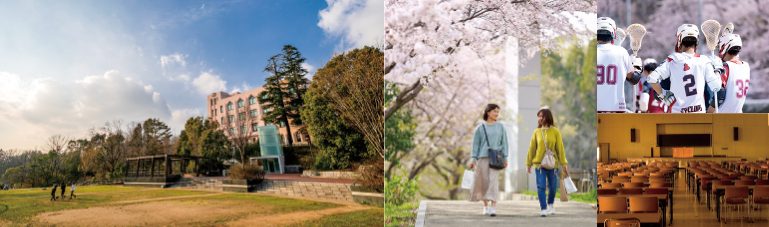
The Main Library, the Museum of the University of Osaka, five schools, and seven graduate schools are located on our Toyonaka campus. It is always bustling with students and is considered our most lively campus. It is a great place to find friends and get in touch with the community! First and second-year undergraduate students spend most of their time on this campus studying general education at the Center for Education in Liberal Arts and Sciences, and a number of graduate students and researchers study and work at the numerous graduate schools and research institutes on the campus.
Minoh Campus
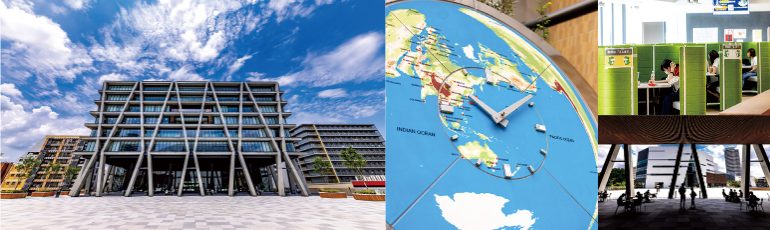
In April 2021, the Minoh campus has been moved to a new location that can be easily accessed from both the Suita and Toyonaka campuses. It is home to 25 language departments in the School of Foreign Studies, and Center for Japanese Language and Culture. A student dormitory, Global Village Minoh Semba, has opened for both Japanese and international students. Students of the Maple Program, one of the short-term student exchange programs at the University of Osaka hosted by the Center for Japanese Language and Culture, will mainly study here.
Access Map